
A soap ad made it into Parliament. On a coin.
In 1885, an MP complained about French copper coins stamped with "Pears' Soap." Real money. Now with a small, unpaid side job in advertising.
Hundreds of thousands of these coins were reportedly in use. The government said it had no power to stop the stunt. Stamping a foreign coin was not against the law at the time.
Most brands pay to get into your head. This one got into your trouser pocket and waited for you to buy lunch.
The man behind it was Thomas J. Barratt. He sold soap. Quietly was not part of the brief.
The man who gave soap a megaphone
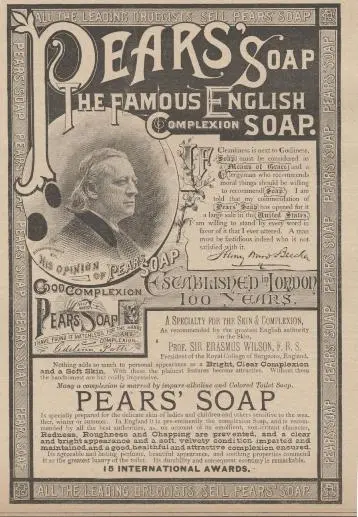
Barratt (1841-1914) joined the London soap firm A. & F. Pears in 1865. He married Mary Pears and joined the family too. The firm made clear, amber soap. By most accounts, it did very little to make people ask for it by name.
Good soap. Tiny voice. Barratt saw room to turn the volume up.
A 1979 New Yorker profile put its ad spend at roughly 500 pounds in its first 80 years. Within a few years of his arrival, it was reportedly about 125,000 pounds a year. The volume knob had left the building.
Guinness World Records named him the world's first brand manager in 2014. A 1908 magazine had called him the "father of modern advertising." Labels aside, he saw the job clearly. Make people remember which soap.
The big idea: keep the name, change the stage
Soap washes. That is a useful fact and a dull ad. Barratt made Pears part of what people saw, read, and talked about. He kept the name steady while finding fresh ways to put it in view.
Repeat the line, not the whole ad
His line was simple: "Good morning. Have you used Pears' soap?" Same question. Fresh places to ask it. The name got a regular seat at the table.
Even small type across newspaper columns spelled out PEARS. A reader could miss the pitch and still catch the name. The soap was getting very hard to avoid.
Go where people already look
Barratt borrowed attention from actresses, painters, and preachers. He did not need to teach people to care about them. They already did.
The trick was to make that attention lead back to Pears. A famous face can get a glance. It cannot help your brand if people forget what it was selling.
The stunts, and the point behind them
The star and the joke
In 1882, actress Lillie Langtry put her name to Pears. "Since using Pears' Soap I have discarded all others," read the line linked to her. One of Britain's best-known faces had vouched for a bar of soap.
It is often billed as the first celebrity product ad. "First" is a large claim. Early and famous is safer. Either way, Barratt was renting trust as well as attention.
In 1884, Punch ran Harry Furniss's spoof: "I used your soap two years ago and have not used any other since." Not quite the glowing review you frame for the office.
Barratt bought the rights and ran it as an ad. He did not waste the joke by getting cross. He made it another reason to remember Pears.
The painting with a new sales job
Sir John Everett Millais painted "A Child's World" in 1886. The child was his grandson, William Milbourne James. It was a painting of a boy, not a pitch for bath time.
Barratt bought the painting and its copyright from Sir William Ingram for 2,200 pounds. A bar of Pears soap was added, and the picture became known as "Bubbles." Fine art had picked up a shift in retail.
Writer Marie Corelli attacked the move. Millais pointed out that he had sold the copyright. Accounts differ on how he first felt about the ad. Owning the rights did not make everyone applaud.
The boy later became an admiral. His nickname stayed "Bubbles." Imagine giving orders at sea with your bath-time brand deal still attached.
The coin was part of a bigger habit
The coins were one way to find space nobody expected a soap firm to use. The point was not to copy the stunt. It was to spot the place people already looked.
The New Yorker also credits Barratt with buying the whole front page of the New York Herald. He won backing from preacher Henry Ward Beecher. A bath-time ad used the line "He won't be happy till he gets it." Different scenes. Same name.
Pears Annual (1891) and Pears Cyclopaedia (1897) gave the name a longer stay in family homes. An ad gets a glance. A useful book can keep its spot on the table.
Later accounts say an Act of Parliament followed the coins. The 1885 record shows the government saying it could not act then. Keep those claims apart. A good story does not need a made-up final scene.
In his own words
In 1907, Barratt explained why an old hit can turn into dead weight:
"Tastes change, fashions change and the advertiser has to change with them. An idea that was effective a generation ago would fall flat, stale, and unprofitable if presented to the public today. Not that the idea of today is always better than the older idea, but it is different - it hits the present taste."
That is the part to keep. A brand needs a steady idea, not a shrine to its old ads. If the trick is all people remember, the trick has eaten the brand.
One famous line often pinned on Barratt is "Any fool can make soap. It takes a clever man to sell it." Treat it as lore unless a source from his lifetime backs it up. A neat quote is not proof of who said it.
Steal this technique
Give the name one job
Write the one thing you want people to link to your name. Put it in plain words. Use that idea across the page, the email, and the ad. Repeating yourself can feel dull long before readers remember you.
Find a fresh place, not a random place
Where does your reader already look? Try a spot that fits the message. A useful tool, a receipt, or a page they return to. You need a reason to be there. Weird alone is not a plan.
Let a fair joke work for you
If a joke about your brand is harmless and true, test whether you can own it. Fix real complaints. Do not treat every angry customer as free ad copy.
Borrow trust with a clear link
Choose a person your buyer believes for a reason tied to the product. Make that link clear. A famous face beside a random offer is an expensive photo.
Keep the idea. Retire the costume.
Pick one old ad. Keep its core promise and try a new scene. Check whether people remember the name and the point, not merely the joke. That is the test. Get into their heads without needing to stamp their lunch money.
